
What Is Digital Exposure and Why Does It Affect Reputation?
Learn what digital exposure means, how it affects online reputation, and why digital privacy matters for individuals and professionals across Africa.
DIGITAL PRIVACY EDUCATION
Forensic House
5/28/20263 min read
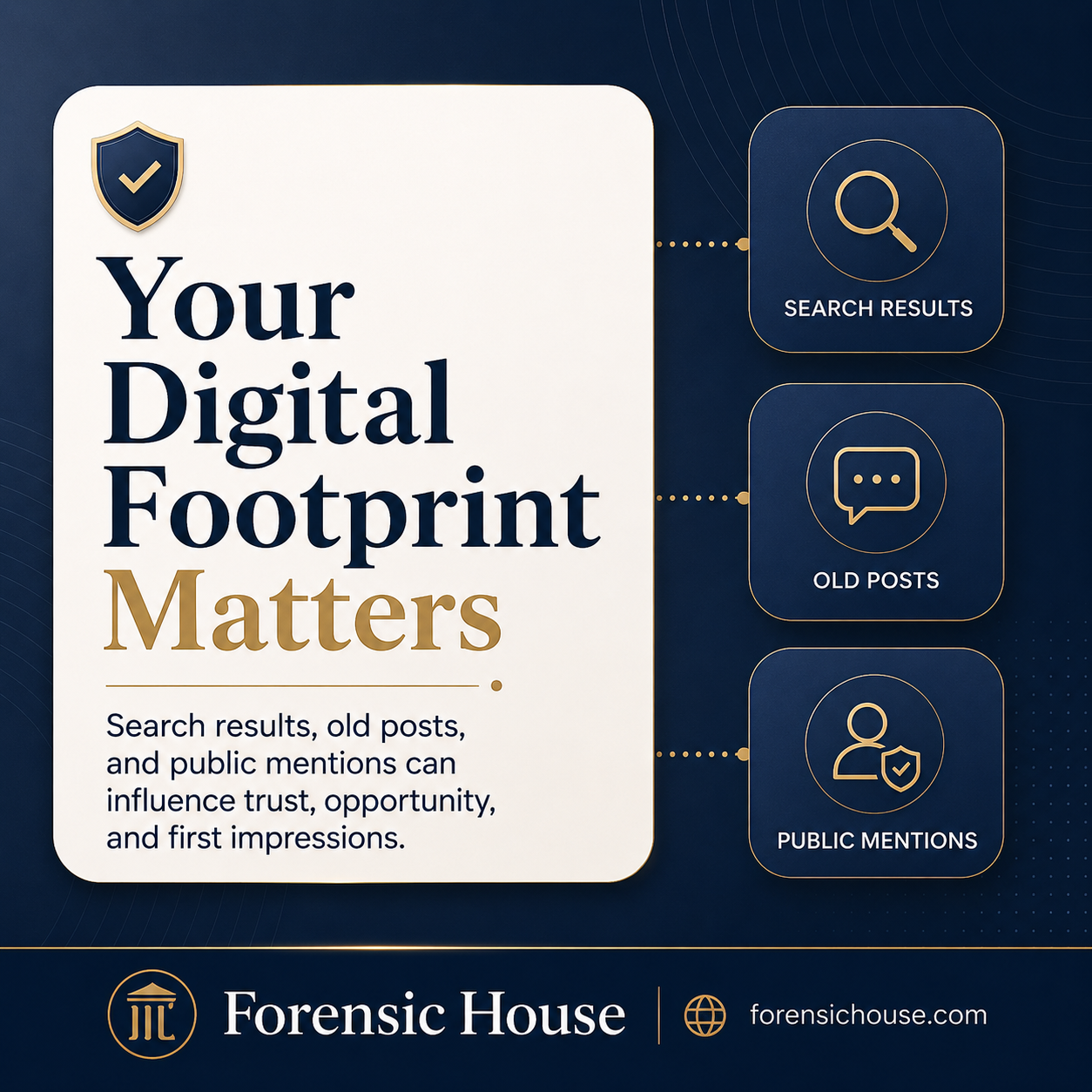
What is digital exposure?
Digital exposure is the way personal information, images, posts, comments, search results, videos, profiles, records, or online mentions become visible to other people through the internet.
Sometimes digital exposure is harmless. A professional profile, business listing, public achievement, or interview can help people build trust.
But sometimes digital exposure becomes harmful. Old content, private material, embarrassing posts, copied images, negative search results, or sensitive personal details can appear online in ways that affect a person’s reputation, confidence, relationships, work, or peace of mind.
This is why digital exposure is no longer just a technical issue. It is also a privacy issue, a reputation issue, and in many cases, a personal dignity issue.
Why digital exposure matters
People often search online before they make decisions.
An employer may search before an interview.
A business partner may search before a meeting.
A client may search before trusting a professional.
A church, ministry, leadership group, school, or community may search before giving someone responsibility.
Even friends, relatives, and future spouses may search online before forming opinions.
This means that what appears online can speak before a person has a chance to explain themselves.
A digital footprint can affect:
trust
employment opportunities
business relationships
public image
family reputation
leadership opportunities
emotional peace
confidence
privacy
personal safety
A person may have changed, grown, recovered, repented, matured, or rebuilt their life. But the internet may still preserve older material that no longer reflects who they are today.
Digital exposure and online reputation
Online reputation is the public impression created by what people can find about a person or organization online.
It is shaped by search results, social media accounts, old posts, public comments, images, news mentions, online directories, screenshots, and shared content.
For individuals and professionals across Africa, online reputation is becoming more important because business, employment, education, leadership, ministry, and social trust are increasingly connected to digital visibility.
A person in Zimbabwe, South Africa, Nigeria, Kenya, Ghana, Botswana, Rwanda, Uganda, Tanzania, Zambia, Namibia, or anywhere else in Africa can be affected by the same problem: one online result can create doubt before the full story is known.
That is why digital privacy in Africa should not be treated as a luxury. It is becoming part of modern reputation protection.
Common examples of harmful digital exposure
Digital exposure can happen in many ways. Some examples include:
old social media posts that no longer reflect who you are
private images or videos shared without permission
embarrassing screenshots being circulated
outdated online profiles
personal details appearing on websites
negative search results connected to your name
copied content appearing on other platforms
public comments taken out of context
old mistakes appearing during professional searches
false, misleading, or incomplete online mentions
In some cases, people do not even know something is online until someone else finds it.
Why people panic when they discover harmful online exposure
Discovering harmful digital exposure can be emotionally overwhelming. People may feel fear, shame, anger, confusion, or helplessness.
A common mistake is reacting too quickly.
Some people post public explanations.
Some send emotional messages to strangers.
Some share sensitive links while asking for help.
Some threaten platforms or individuals publicly.
Some delete accounts without saving important evidence.
Some ask unqualified people for urgent help.
These reactions can sometimes make the situation worse.
A calm first step is usually safer than a public reaction.
A safer way to respond
When a person discovers harmful digital exposure, the first step should be careful and private.
Before taking action, it may help to ask:
What exactly is visible online?
Where is it appearing?
Who controls the page or platform?
Is the content original, copied, or reposted?
Does it show up in search results?
Is there a privacy, consent, impersonation, or reputation issue?
Could public discussion make the situation worse?
What evidence should be saved before anything changes?
This kind of review helps a person understand the situation before acting.
Where Forensic House fits in
Forensic House exists for people who need private, ethical, and reality-based digital privacy and online reputation support.
The goal is not to create panic or make unrealistic promises. The goal is to help individuals and professionals understand their digital exposure, avoid unsafe public reactions, and consider responsible next steps.
Forensic House focuses on dignity, privacy, reputation awareness, and careful guidance for sensitive online situations.
To learn more about the Forensic House approach, visit the main website at Forensic House. You can also read more educational guidance on the Forensic House blog.
Final thought
Digital exposure can affect how people are seen, trusted, and treated. But one online result should not always define the whole person.
The best response is not panic.
The best response is privacy, clarity, and careful action.
Understanding digital exposure is the first step toward protecting online reputation and rebuilding with dignity.